Pour a cup and settle back to discuss books, meet authors, and talk about all things creative.
Tuesday, April 7, 2015
Thursday, October 3, 2013
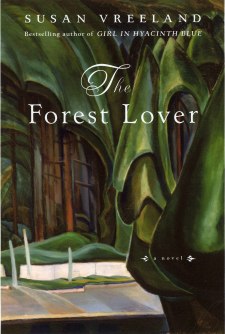
Book Talk: The Forest Lover by Susan Vreeland

At first glance, the book did not appeal it seemed to be one of those dry biographical fictions of a boring person with whom I could never find any connections.
Sleepless and the book handy, I started it....and quickly found myself drawn into the life of artist Emily Carr by her strong personality and the vivid descriptions of the Pacific Northwest...the Great Western edge of the Canadian provinces.
Trained to create nice womanly watercolors and safe pastoral vistas as befitting a good woman of Edwardian times, she looked at her beloved landscape, especially the native Totems, decorations, and lifestyle and longed to do more.
Here mounting frustration to be taken seriously as an artist (and not just a female artist) and her constant love of her homeland set her on a path divorcing her from the traditionalist art recognized by the restrictive art world of Vancouver and British Columbia to master the Fauve style and finally to develop her own unique touch blending many schools with the bold colors and dominant themes of her forests, villages, and native life.
Along the way, the author illustrates the struggles of the First Nations people of western Canada were a slow annihilation of their necessary creative outlets, their bone deep connection to true spirituality and their ancient values as significant in North America as their European counterparts.
As I read, however, I was struck by home universal her struggle to break out of a mold and create what was unique to her and how common is the journey such creatives make as they must dodge the narrow minded and those who fear change as a challenge to their existence.
Susan Vreeland. The Forest Lover. Viking, 2004. ISBN: 0-670-03267-0
Author Page
Book Club Page
Monday, August 5, 2013
Book Talk : Creepers
It was a hot weekend and I picked this up as much for the shadowy tones of the cover as for the description. A suspense novel it was an engaging read due to the unique subject matter of people who investigate abandoned places. Today they are known as Ubexers, Legend Trekkers and several other names.
Creepers lends itself to the secret desire of people to look around in places forbidden, to reveal and discover that which is hidden, and to time travel even if only in their imagination. An abandoned hotel due for demolition makes the perfect setting.
Creepers has a solid cast of characters, story development is very good, clues are not too apparent to dissuade the armchair sleuth. The adventure is realistic and one can actually feel the light less, airless tunnels they tread through to enter the old abandoned hotel.
Readers hoping for something to go bump in the night will be disappointed, for all of Morrell's ability to craft atmosphere and suspense. The story is firmly grounded in the reality of this world with no visitations from the next. The reality in the present, however, is threatening enough to satisfy most readers looking for adventure, suspense, and mystery. Overall I can recommend the work as entertaining and one that will not leave you tossing the book against a wall as a vexed reader.
The characters are well constructed but a little two dimensional leaving the reader to wonder: "Do I care about this person or not?" If the book suffers from anything it is an over dependence on coincidence. The author may have been aiming for a jaunt into the Jungian sphere of synchronicity but maybe not.
Book Talk:The Atlantis Code
I love a smart book with strong characters and good action. Once the action bogs, my mind wanders, so I want the author to keep me on task. Toss in a little alternative history, secret groups, and mystery and the recipe should keep me busy for a few hours. I am a fast reader when the book is good.
Charles Brokaw's The Atlantis Code was a recent find for me and I had high hopes for an entertaining time curled up with a book. I was not disappointed as it was a well written book, good characters adequately drawn to engage them as real people, and a mystery to keep you guessing.
I was not, however, a really good book. It seemed to wander too much into the shapes and forms of a 'da Vinci Code' book genre: super intelligent scholar is the only one to solve some arcane mystery, secret cult/group/agency out to stop them, and some secret that will shock - SHOCK- I tell you! the entire religious world, social order, goverment, global civilization, etc.
Brokaw's hero, Thomas Lourds, is super smart guy who has to fend off all the super lovelies who throw themselves at him. It is never his fault; he is, he tells the reader, not out for commitment and they know this up front. Lourds, however, is not really that likeable and dispite his being portrayed as getting excited and involved in the quest for the meaning of the strange objects he needs to find. he fails to portray any 'hunger.' Maybe it is because he lacks the passion, the opinion, and the gravitas of a man devoted to an arcane subject area who has achieved world acclaim. That maybe cliche but having been around some world class academics I can affirm they can get that fire in the eyes and passion in their voice that is lacking in Lourds.
An author's job is to have his characters grow and evolve over time. It is hoped if a sequel emerges that we see Lourds not get the woman, reclaim some of the passion of his subject and not find answers coming as easily as they did in The Atlantis Code.
Review scale: 3 coffee cups
Monday, June 24, 2013
Author Talk - Tim Hancock
Author Tim Hancock writes a gripping blend of action and drama sure to please readers. He
is a resident of Tulsa and has four books available in print or Kindle versions on
Some of his works include: A-21, When Sparrows Fall, Song of the Nightingale, and Caged Doves.
"I am a die hard Patriot. I am a staunch supporter of gun rights and the 2nd amendment. In fact I am a supporter of the Constitution in it's entirety. Do not label me as a left wing conservative because nothing could be further from the truth. I am registered Independent and have some very liberal views on a lot of issues Gay marriage to name one.
I am a disabled Navy Veteran that loves spending time with my Mother, my wife my 5 children and their spouses and most of all my 3 grandchildren, Writing and promoting my current work is my only job, I do not have another one. I try to do both parts of that job very well and I hope you enjoy."
To order direct or contact the author: http://www.timhancockauthor.com
Author Talk - Cullan Hudson
Beneath a sprawling canopy of moss-draped oaks, author Cullan Hudson snaps several shots of a weathered old tombstone.
“She was spotted standing near this grave. The witness told me that, although he could tell it was a woman, there really wasn’t anything there more than a free-floating shadow.”
We’re standing in the middle of an old cemetery in the historic heart of Mobile, AL. Ensconced within a lush carpet of green grass are numerous graves dating to before the Civil War. The cemetery is also a refuge for several homeless men who often wander in for a quiet respite beneath the massive trees.
“They’re harmless,” Hudson says. “The worst they do is litter.” A look of mild reproof distorts his face momentarily before, wry mirth he asks if I’ve heard of ‘The Mobile Leprechaun’. I confessed I hadn’t and he launches into a ridiculous story about an Internet sensation from a couple years back. Apparently, some…colorful individuals spotted what they could only describe as a leprechaun (the mythical being of Irish folklore) in the boughs of a tree just outside the cemetery walls.
“I wasn’t living here at the time, but I recall the video on the Internet,” he says with a chuckle. “It had to be the most ridiculous thing I had ever seen—and I have seen my share of ridiculous.”
As the author of Strange State: Mysteries and Legends of Oklahoma, Hudson spent years tracking down local ghost stories, UFO sightings, and Bigfoot encounters. Fueled by a passion for the unexplained and a love of writing, he uncovered rare tales and exposed new facts. A recent book,Weird Oklahoma, in fact has labeled the author a "Fortean investigator."
“I’ve also heard some crazy stuff from people. I mean, obviously hard to swallow stuff. But you smile and you listen and you make them feel like at least somebody is taking them seriously. And while the stories might be incredible, I can’t say they haven’t inspired my writing.”
The writing he talks about includes his newly-released novel, The Mound. He easily admits it’s a summer beach read and that he and his co-author (his mother, of all people!) didn’t set out to write the great American novel.
“If someone says ‘What a fun book,’ I feel like I’ve really accomplished something.”
Beach book or not, he managed to slip in some commentary in the over 300 page story about a group of disparate souls that converge on a turn-of-the-century hotel just as an ancient evil awakens. Laced throughout are observations on the field of paranormal investigation, reality TV, and alternative history—even art and architecture.
“The Mound happened because of Strange State. Even before it was published, I was getting all these great story ideas from the different accounts I had been gathering: Indian mounds, haunted hotels, anomalous archaeology….”
Admittedly a novice at writing, he couldn’t quite get it off the ground. He says he had the plot laid out pretty well, but couldn’t quite see how to end it.
Enter mom.
“She has written a lot more than I have—much of it published. Although neither of us had tackled a novel before, I asked her for her thoughts on what I was working on and she came back with some great ideas. The chemistry was there right away and we really fed off that energy to craft the story.”
The same said energy he claims brought one character to life.
“The psychic, Shade, whom we first called Rain—a really overused goth name—began life as just another character, but as we began fleshing her out…. Well, she just came alive for us in myriad unexpected ways.”
But it didn’t all flow from the pen (or computer) in one night. Hudson says it took a frustrating eight years to finish the manuscript. Countless drafts, revisions, redactions, and hair-pullings took place before the two felt the project was done.
“Or maybe we were just sick of it,” he laughs. “You spend too much time with something, perfecting it as much as you can, and you start to resent it. It really helped that we would take breaks from it, come back, and see new possibilities.”
While Hudson admits it was easy to start with a basis of familiar themes (readily acknowledging that the book is an homage to horror masters such as Lovecraft and King) and inspiration in the form of real life Oklahoma mysteries, it all sprang from the two author’s united imaginations.
“The Skirvin, a famous Oklahoma City hotel, was a big inspiration for The Montford Arms (the novel’s fictional hotel); however, we had the concept of renovation years before the Skirvin became revitalized as a Hilton property.”
He says this with an air of pride, as if his work somehow inspired events to unfold in the universe.
“If only!” he laughs. “If I had that kind of power, I’d have more money. No, it’s just that you send a message with your work—intentional or not. That was one of my early messages: Why is this hotel being left to languish? It was just nice to see it spared the wrecking ball. Maybe in some cosmic sense, my good ‘vibes’ had something to do with that.”
Messages aren’t something Hudson is known to shy away from. Strange State is replete with passages where a dispassionate narrative suddenly takes a nosedive into full-on diatribe, attacking everything from sloppy research and paranormal zealotry to salaciously exposing hoaxes and daring various institutions to embrace their haunted heritage.
“I don’t set out to be antagonistic or controversial. I just have opinions and an Irish mouth.” At this, he only manages a half-hearted chuckle, as if to telegraph the truth behind these words.
Controversy has come with a rising profile within the state and the paranormal community at large. While he admits to sometimes being affected by this, he says he tries to shrug most of it off and forge ahead.
“I guess I demand more from those who investigate these mysteries,” he says, launching into an impassioned spiel worthy of his status as a minister’s son. “I often see ‘true believers’ wearing science like an ill-fitting Halloween costume when they’ve little interest in following that discipline’s precepts.”
But it isn’t as dire as all that. Hudson agrees that if you want to go heedlessly chasing ghosts in the dark, “By all means, do it! It’s one of my favorite things. Just don’t call it science.”
From haranguing readers about the evils of the orb-loving, matching t-shirt crowd of paranormal investigators to challenging people to look at the mysterious from new perspectives, Hudson’s blog (the aptly titled “Strange State”) is his outlet for many of his musings and rants—as well as his dark humor.
“Humor—sly, sardonic, and dark—is a big part of my writing. It’s a part of who I am and I simply can’t divorce it from what I say. I think a lot of people appreciate it. At least, I hope they do. It balances what otherwise might be considered a raging bitterness with much needed levity.”
Sharing concerns that sometimes he needs a hard-nosed editor to tell him to keep his mouth shut now and then, Hudson says that, overall, he’s happy with his work and appreciates it when others take notice.
“I was surprised after ripping into a book by cryptozoologist Loren Coleman—during which heated comments were expressed on my blog—that my own book was fairly judged by the man. I was stunned. It would have been easy for him to rip into mine, but he refrained. I learned a lot from that.”
Much of the press Hudson has received has been favorable, which baffles him. “I’m so grateful, but I can’t help thinking there’s some odious journalist just waiting to gutStrange State or The Mound. I wouldn’t blame them.” He laughs at this, admitting he could easily point to the very soft spots such a writer might attack.
“Still, I must be doing something right,” he imparts with a look of bewilderment, as if he can’t believe it when success knocks on his door. “I’ve been asked by three or four production companies to audition for various paranormal reality programs in production.”
He’s turned them all down. When asked why, he shrugs. After a moment of silence, he arrives at an answer that seems too kind to be the whole truth.
“I suppose I’m not comfortable being in front of the camera like that. And I was really hoping they wanted me for research or writing purposes.”
Research is where Hudson excels. The arcanum churned up in his wake could fill a book—two, in fact. 2012 will see the release of Stranger State: MORE Mysteries and Legends of Oklahoma. The mountain of notes he shows me is nearly equal to that of the folders in his file cabinet for the first book.
“Growing up with a librarian mother, you learn tricks on how to get the information you’re looking for. And sometimes the information you didn’t even know you wanted. I spent a lot of my youth in libraries. There are secrets in there, if you know how to look.”
It shows. His first collection of strange-but-true tidbits brims with stories that haven’t seen print in more than a century (if ever). Several of the accounts are unique to his work and he’s proud of that.
“I think of them as my ‘babies’,” he chuckles. “It’s my legacy for Oklahoma. I’m not the most….” He scrunches his face, as if trying to squeeze the word out. “Statriotic? I don’t know what you would call patriotism on the state level, but I feel proud of my work. I’ve brought a lot of neglected legends to light and shared them with a whole new generation. I think that’s really cool.”
Many of these orphaned enigmas piqued his curiosity. He wasn’t satisfied to simply retell them; he had to track them down, find out more, uncover the truth, and—hopefully—experience something for himself.
Such was the case at the Overholser Mansion, a stately three-story home in Oklahoma City’s historic Heritage Hills neighborhood long thought to be haunted.
“That place is haunted. I try to keep an open mind and remain skeptical, but there are some experiences you just can’t shake.”
While waiting for a private tour, Hudson says he heard the faint tones of some bygone tune—just a bar or so—as he stood on the porch. The neighborhood was dead quiet, he insists, and the music “wasn’t like anything you’d hear in the 21st Century.”
“It was just old fashioned chamber music, like you’d hear on a gramophone.”
Later, an unseen presence brushed past him as he crossed the second floor landing.
“I thought maybe it was a spider web, at first, but there was nothing there. Not on the wall, not on my clothes. Besides, they keep that place clean.”
Another account he recalls happened twenty minutes west of the city, in El Reno.
“In the old downtown are a number of buildings dating to the early 1900s. I was asked to help guide volunteers through the sprawling structure as a part of an experiment being conducted by a local investigation team. On the final night of the trials, we had very few people, so we decided to just enjoy the place; do some ghost hunting. As we stood in one darkened apartment above and old store front, we asked the usual EVP questions. If we were lucky, we’d get some great responses on playback. To our surprise, a man’s muffled voice came to us from the doorway nearby. We couldn’t tell what he was saying, but it was crystal clear that it was a man talking—like from inside a box or something. Very garbled. Unfortunately, from what I hear, nothing was recorded of that event.”
His curiosity for investigating these bizarre encounters hasn’t ended at the Oklahoma border. Hudson has investigated such disparate locales as a haunted department store in a small West Texas town to poking around the ruins of mysterious pyramids built by unknown hands on an island in the Canaries; visited Mayan ruins at the heart of 2012 prophecies and examined the famous Chase Vault on Barbados, known for its mysteriously moving coffins. He even spent three years living in and examining ghosts, UFOs, and the legend of the Chupacabras in Puerto Rico.
“You truly come to understand the socio-political influences on how different cultures perceive the paranormal when you spend time investigating these things abroad. For instance, in England and France, I found ghosts under every welcome mat; but in Spain and Portugal, that wasn’t the case.”
I ask him if he will be writing about these ghostly globe-trotting adventures. With a wide-eyed sigh, he tells me, “I try to write about what’s been overlooked. The impetus for Strange State was just that. In as far as I knew, nothing had been written about Oklahoma. I wanted to remedy that.”
Later, while working on the manuscript, he learned another author, David Farris, had beaten him to the punch.
“Once I found his books, I was a bit dismayed. But only for a moment. I decided, I’m going to do it better! More! And I did. I researched the hell out of that book. And I was still finding more.”
That more will be included in 2012’s Strange State: MORE Mysteries and Legends of Oklahoma. This volume, he says, will include sections on true crime, mysterious disappearances, and cattle mutilations.
You can look for both Strange State: Mysteries and Legends of Oklahoma and The Mound for sale on www.amazon.com, or visit his blog at www.strangestate.blogspot .com to learn more.
__________________
(Stephanie Cahill, 2011, used with permission for an installment in the Paranormal Librarian Blog Author Interview Series; reprinted here by permission)
Author Talk - Dennis Mcdonald
Our friends at
PARANORMAL LIBRARIAN caught up with Oklahoma author Dennis McDonald on a rainy day in spring as winter reluctantly kept a toe-hold on the region. Our meeting occurred in a warm medieval style tavern tucked away on a quiet and forgotten street. It was a sensory banquet that brought visions of ancient knights, wizards, and heroic quests. The dark beams were satuarated with the aroma of strong ale, chunks of Irish peat moss on the fire added a smoky intimacy, and across the room there was a small group with lute, bodhran, and a fiddle playing a muted but lively jig. The horror/fantasy author of 13 Nightmares, Ebon Moon, andUndead Flesh was sitting at a cozy corner table, a mug on the table, and a broad smile on his face as his fingers kept time to the music. I was warmly greeted and we settled down to learn more about this up and coming voice in the world of horror and fantasy.
When you are not writing or being you, what is your work or activity?
I work for Diagnostic Labs of Oklahoma and pick up lab specimens from hospitals and doctor offices. I do a lot of driving every weekday.
When did you become an author? How did it develop, and what was your inspiration?
I published my first book 13 Nightmares about four years ago, but in reality, I’ve always been a writer since the age of 13. It just took me forty years to actually finish something I started. I wrote and published my own role playing game system back in the early nineties titled Adventure Maximum. I sold all the books and have since retired from gaming after thirty years involvement in the hobby. My love of writing continued however. I found a site called FanStory on the internet where writers could post their stories and get them read and critiqued. I wanted to be a fantasy writer and posted chapters of my novel up on the site. I received a few positive reviews, but that was about it. This site also sponsored contests for short horror stories. I entered a few of my horror tales and won against a hundred other writers. One Halloween story contest I won four hundred dollars. I decided to switch from writing fantasy to horror. In 2009 I decided to put out a collection of horror stories called 13 Nightmares. Since I was a total unknown writer and knew very little of the publishing world, I decided to self-publish like I did with my game system to see if readers would embrace me as an author. I’ve since self-published my werewolf novel Ebon Moon and just released my zombie novel Undead Flesh.
What are some interesting events from your career as a writer? Any bloopers?
I can’t think of any real bloopers. I’m sure they are there, I just can’t recall any. I can tell you that I started writing Undead Flesh a couple of years ago for Nanowrimo. The basic premise of the novel was zombies rising from the grave after a massive earthquake in Oklahoma. It was while writing about the earthquake one morning, that a real quake rattled through the state. I had lived here all my life and never experienced a quake until that morning. Now we have them all the time. Hopefully, we don’t have the big one like in my novel.
What do you think your impact has been among members of your audience? Your community?
I hear about my books every day either by people in the town, the internet, or through my work. As a self-published author you reach out to readers first, instead of publishers and distributors. You build a dedicated readership among the people in your community and spread from there. I continue to do just that.
What would you have liked to do with your work if there was more time, money, wider support, funding, staff, etc.
I would love to see my stories on the big screen. I scripted a small film from my short story The Last Trick or Treater and it shot by a woman filmmaker in Tulsa. I went to the premiere at the Circle Cinema and it was so cool to see my story and dialogue on the big movie screen.
Where do you see yourself in the coming years? Will [insert author name here] remain or transform within the book world or move on to something else?
I’m a writer to the end. I don’t even think of myself as an author. I’m a writer first. My goal now is to take on the traditional publishing world. I’ve proven to myself that I can write and sell books. I’m ready to move to the next step.
As a writer, what and who are your influences? Where do you get your ideas?
I saw a saying on the internet that a writer is someone who has a thousand tabs open in their mind at once. This is me. While writing this, I’m thinking of a short story where someone has a computer with the power to reach back in time to interview the greatest authors of all time and post their ramblings on the internet. I’m imagining the story in my head as I’m thinking about what I’m writing right now. As a teenager I read voraciously back in the sixties and seventies. My favorite authors were Asimov, Clark, Heinlein, Tolkien, Bradbury, and Robert E. Howard.
Readers often like to find authors similar in tone, subject, or style to another. Who would most enjoy your work: readers of Stoker, Lovecraft, Shelley, King, Koonze, etc?
Probably King. I’ve had a lot of fans of Stephen King say they enjoyed my work.
When you write, do you require a special place, quiet, mood music, a favorite chair or sweater, etc.?
I live in a hundred year old home and my writing room is an upstairs bedroom. The walls are covered with pictures and posters of dragons, Bruce Lee, Count Gregore, and art work. My chair is a broken office chair in front of my Dell. I write in silence most of the time.
Who is Dennis MacDonald? How similar are the two personas of author and Dennis? In the real world, do you like sports or other pursuits? On any given day where would someone find you and what would you be doing?
I’m usually just sitting at home most of the time. I’m basically a recluse when I’m not at work. I like to watch Netflix and play a few games on my Xbox. If you want to lose your social circle, be a writer. It’s a lonely craft. On the other hand, I’m a convention junkie and love sci-fi horror cons, writing conferences, book signings, etc. These are the times I get out amongst people and away from long hours on the computer.
What is the next big thing on your personal and professional agenda?
Since I finished my trilogy of terror, I’m shifting gears into my fantasy novel. The first 100,000+ word manuscript is done in rough form. The project is too big for me to self publish, so I’m sending it to traditional publishers. I still write short stories when I need a break, and have a couple of horror novels on the back burner.
The evening was creeping up to peer in the windows at us and the after work crowd began to shuffle in bringing the scent of more cold rain. As I left Dennis McDonald friends were hailing him and a discussion of a recent convention began to fill the void left by the departing musicians. It looked like a perfect night to read his newest work....if I dared.
Dennis McDonald: http://www.dennismcdonaldauthor.com/
Monday, May 20, 2013
Author Talk - Russell Ferrell
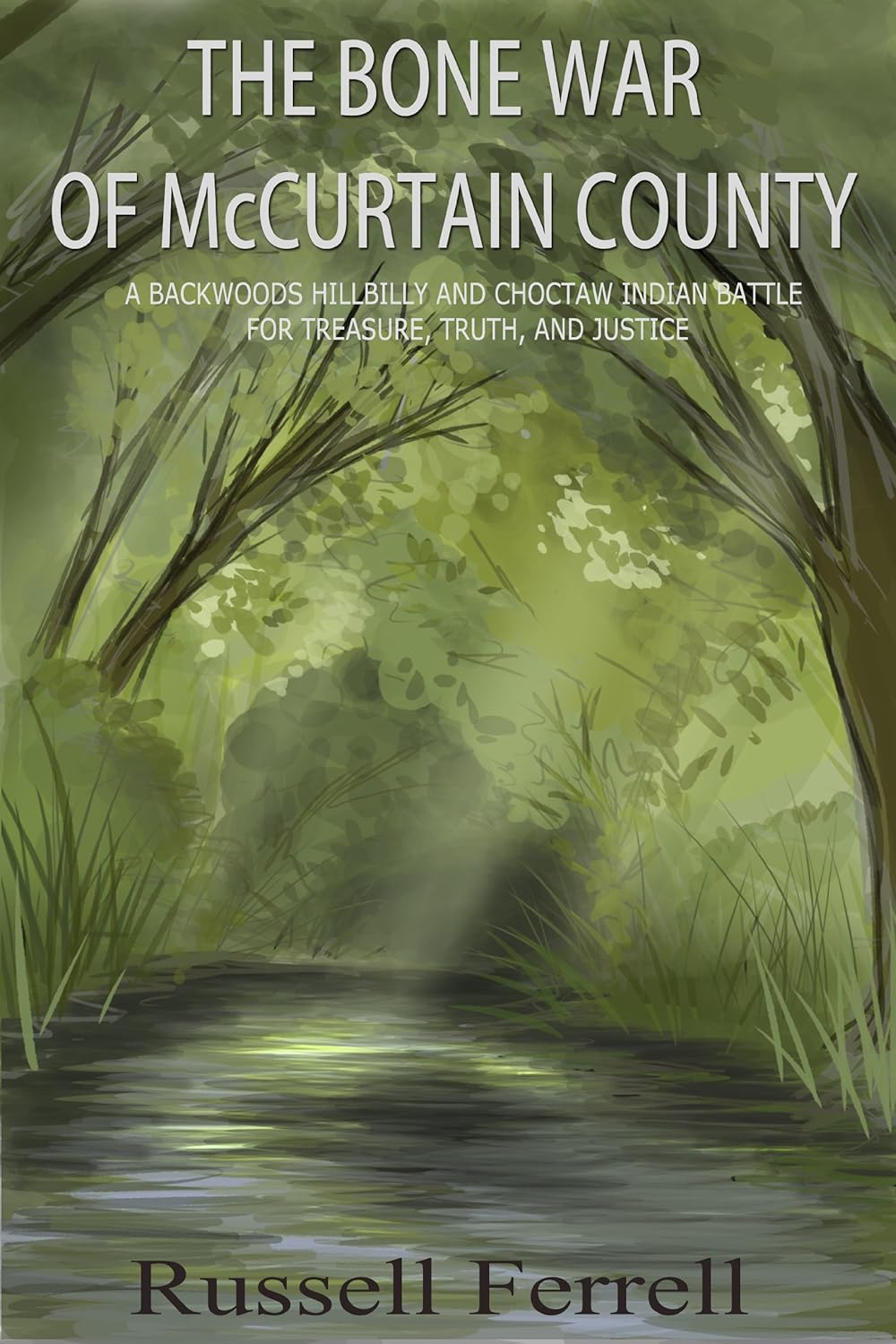
Russell Ferrell is a non-fiction historical writer and educator. He has worked as a journalist and educator and in several varied occupations. He owned and operated a cattle ranch in Atoka County, Oklahoma, before moving to Red Oak, Texas, where he currently resides with his wife, Waynetta, and their four dogs and five cats. He was working on several projects in the historical field when he put them all aside to write the true story of Cephis Hall and Sid Love, the two amateur naturalists who discovered and excavated the Acrocanthosaurus in McCurtain County, Oklahoma - one of the greatest dinosaur discoveries and excavations in history.
When you are
not writing or being you, what is your work or activity?
I am a retired
educator. I have taught science and history. I do a lot of reading and try to
stay informed about the world by watching a lot of Link TV, Current TV, and the
news programs on CNBC and MSNBC, such as the ED SHOW and the Rachel Maddow
Show. I read such publications as The
Nation, Mother Jones, The Progressive, and The Oklahoma Observer to stay
abreast on current events. My hobbies are gardening, travel, carpentry, nature,
outdoors, movies, museums, documentaries, and learning for the mere sake of
learning. I love dogs and cats, and enjoy working with cattle.
When did you become
an author? How did it develop, and what was your inspiration?
I had always wanted to
research and write. Ideas and knowledge have always been important for me.
Since grade school, I had always been told that I was a good writer – good at
expressing myself with pen and paper. I considered it as one of my natural
talents or gifts that I was born with. In my view, either you were born with an
ability to write, or you weren’t. If you
don’t have an innate capacity to write, you can never learn or excel in the
trade. Your brain has to be properly wired to be a writer. Perhaps there is an
inherited base to it. I learned from my genealogy that I share common
great-grandparents with many famous writers. I must admit, however, that I am an obscure,
unknown writer that may fall flat on his face.
Writing and publishing
a book was one of my goals in life, but I did not get serious about a
particular project until reaching the age of 52. With more discretionary time,
I started work on several projects within the historical field. I was doing
research and had written a few chapters on a book about barbarians and their
contributions and legacy to the modern world when the story of Cephis Hall and
Sid Love was sort of dropped in my lap. After learning about their story from
my son, Thomas, who had visited Cephis Hall, I soon took up the challenge of
telling their story to the world.
What are some
interesting events from your career as (the writer, Russell Ferrell)? Any bloopers?
Meeting and
interviewing Cephis Hall and gradually learning his story was a breakthrough.
Although I am still waiting, as of yet there have been no other major events or
breakthroughs. Becoming a writer and publishing a book is certainly the
greatest challenge I have ever undertaken. It is an extremely tough business in
which to get a break and get your feet planted squarely on the ground. The
publishing industry, in my view, is sort of rigged and monopolized. The
industry is controlled by a few big publishers, distributors, and media
conglomerates.
Although it has become
easier for the new and independent author to self-publish, the market still
favors the brand name, celebrity authors. At the same time, there appears to be a
declining literacy and book reading audience, at least in the United States.
Marketing the finished book and getting access to book stores and distribution
chains is certainly as challenging as actually writing it. Also, a depressed
economy is hurting the book industry. Books rank low on the priority list of
consumers, at least in the US. Americans will go out to eat or go to a movie or
sports event before buying and reading a book. The digital generation reads
even less than their ancestors.
What do you
think your impact has been among members of your audience? Your community?
I am the type of reader
who reads primarily to learn. Entertainment is secondary for me. As a writer,
my purpose is to inform and educate, as well as entertain. My job as an
educator is to convey information and ideas – to impart knowledge to the
audience. This bias is reflected in my writings.
As a reader, if I can’t
learn anything new or get some kind of new insight from a piece of writing, I
have little or no use for it. With each book or piece that I read, I want to be
able to see the world in a different light and with a little more clarity. That
is the same hope I have for my readers. When you read a book rich in new ideas
and insights, that book becomes part of you as if its content has been encoded
on your DNA.
I hope that my impact
as a writer will be to inform, educate, and entertain my audience. If I can
accomplish that, I have at least partially succeeded, even if I make little or
no money from my finished products. That, however, presumes that the audience
will expand to a meaningful size.
What would
you have liked to do with your work if there was more time, money, wider
support, funding, staff, etc.
Like an impractical
idealist, I hope that my work will have a larger, redeemable benefit to the
overall society, to humanity, and the environment. If a single piece of writing can change ideas
or open people’s eyes and minds to a larger picture or purpose, than I have
contributed to making this a better world.
Where do
you see yourself in the coming years?
Will [insert author name here] remain or transform within the book world
or move on to something else?
The odds of a new
writer making a successful, long-term career out of writing are tenuous. It is
extremely hard to make money in this business. Although money should never be the
prime motivating factor, it takes money to remain viable and stay in the game.
I have many ideas and projects on the burner and have already broken ground on
other book projects. However, if the writing effort is not financially
sustainable, I, like so many others, will probably fall by the wayside.
I plan to take on and
finish one or two more projects to get a better gauge on the market and my
potential. One of these must find an audience that will provide enough monetary
sustenance to keep me hanging on as a writer.
As a
writer, what and who are your influences?
Where do you get your ideas?
A writer must also be a
reader. My reading of the works of other authors has kept me active in the
world of literacy and ideas. Once people stop reading and learning, they are on
a dead end road to mental atrophy. American society does not value books and
learning like it should. This trend is threatening the viability of our
democratic institutions. Without an informed public, democracy or a
representative republic cannot stand.
To remain a social
activist or functioning member of a democratic republic, one must read plenty
of non-fiction exposes that give good insight into the workings of society and
government. People must cultivate new ideas and be able to question the status
quo; otherwise, the society becomes stagnant and degenerate. Fiction can also
be good if it opens peoples’ minds and senses while according new insight into
the ways of the world.
I get my ideas from
books, magazine articles, documentaries, and television news programs. Or at
least these sources allow me to establish a framework within which I can
synthesize my own ideas.
Readers often
like to find authors similar in tone, subject, or style to another. Who would most enjoy your work: readers of
Stoker, Lovecraft, Shelley, King, Koonze, etc?
Since I am not a
novelist or writer of fiction I am not really able to answer this question.
Readers of non-fiction
who like history, science, adventure, mystery or just simply a good story,
should find my book The Bone War of
McCurtain County compelling.
When you write,
do you require a special place, quiet, mood music, a favorite chair or sweater,
etc.?
I like to be
comfortable. I may prop up on my bed and write with pen and paper, or sit at a
computer and compose. Generally I prefer quiet, but music or noise does not
necessarily distract me.
Who is
[insert author name here]? How similar
are the two personas of author and [insert author name here]? In the real world, do you like sports or
other pursuits? On any given day where
would someone find you and what would you be doing?
I am, as is claimed to
be the case for most authors, rather introverted. I am usually content to muse
and ponder ideas and issues in a solitary mode. I prefer to use my own
intuition and don’t like to follow the noise of the crowd. Being a recluse or
hermit has some value for me as long as I can indulge in the world of ideas.
What is the
next big thing on your personal and professional agenda?
I am driven by a desire
to share the story of Cephis Hall and Sid Love with the world. I am indeed
fixated on making The Bone War of
McCurtain County a success, although, I admit, it is an uphill battle.
Beyond that, it is my desire, and the desire of Cephis Hall, as well, to see
the story made into a major motion picture that becomes a smash hit. Virtually
everybody who knows the story or has read the book agrees that it would make a
great movie. We have, indeed, already been approached by a small film company
in Texas, but prefer to wait on a big Hollywood production company. You only
get one shot at something like that, so I want to take my best shot with the
best producer I can match. I want the
world to finally learn the amazing story of Cephis Hall and Sid Love.
To order visit Amazon.
Monday, March 11, 2013
Author Talk - Marilyn A. Hudson
I caught up with author Marilyn A. Hudson on the campus of the University of Oklahoma in the Great Reading Room in the main library. It seemed a natural setting with the polished old wood and the gothic architecture for the author of the chilling short story collection, The Bones of Summer and co-author of the horror novel, The Mound. The spirit of learning and the sum total of human knowledge seemed to hover around like a phantom seeking to possess some willing soul. A soft warm glow spilled in through old windows forming warm puddles of diffused light on the glossy floor.
Tell us how you got started as a writer.
My first foray into writing was scripting an episode of ‘Star Trek’ when I was twelve. No one ever read it but I had a lot of fun writing that and realized I really enjoyed the process. It was later, though, in college when I realized I preferred to write papers that I began to think maybe, just maybe, I might become a writer one day. I had several hundred articles published in small, regional or specialized publications, letters to editors, and company newsletters trying on styles and honing my craft.
What authors or films have most influenced you as a writer?
I read the classics – Bronte, Austin, Euripides, Poe, Wilkie, James, and even an author from the mid-fifties, Emily Loring, who had a gift for description – but had a fondness for suspense and mysteries of a more recent era. I have had the joy of reading widely and well because I always love a good story or a well-written book. Therefore, I have enjoyed many Victoria Holt, Barbara Michaels, Dean Koontz, Stephen King, and Kay Hooper works.
In ten years, what themes do you look forward to exploring or what new things do you expect to try in your work?
I look forward to getting these - other stories - out of me. They are nestled close, incubating, biding their time but I know their time is coming.
Will they be the same genre or will you be branching out?
Yes and no, because I think they will be more a synthesis of all that I am as a writer, or what I hope to be, as one. I think that is the goal of anyone who truly writes, who creates, out of compulsion and deep need. Genres are stepping-stones to get us to the place where we truly carve out our own territory in the landscape of words and the imagination. In that place, we explore broader vistas and more meaningful themes with the tools and skills built over time.
Tell us about your fans and readers.
They are wonderful! My readers are generally people who enjoy the genre work of the mysterious or those who are attracted to history. These can be diverse audiences! I enjoy meeting them at book signings and festivals.
As an author, what have been your greatest challenges?
There is an old Jim Croce song, “Time in a Bottle”, and in that is a line which has always stuck with me. It is about it being hard to do the things you really want to do once you discover just what that is and that is descriptive of most people. The challenge is to balance everything, all the demands life makes of you, and still have the energy, focus, and imagination left to create something of worth. The focused, driven, single minded author can be a painful sack of self-centered, disconnected, and unhappy human being. Keeping the balance and the inspiration can be tricky.
If money and time were not an issue, what would you like to do as a person or as an author?
Write all the time! I would travel and discover new things and actually walk in places where I wanted my characters to walk. I have always had a strong imagination but to see, smell, and hear surroundings can add so much to how you construct a scene and develop a character.
Sometimes people have ideas or have heard tales of writers who are very picky about how and when they write. When you write do you have any specific rituals or traditions?
I have be able to focus and to know that for this block of time I can devote myself to crafting words into story or to respond with freedom to the inspirational wave which might sweep over me. I try to keep paper and pen with me so that when that scene leaps into my head full blown I can capture it. Or, if I wake in the middle of the night from a dream I can do the same. I often play mood music – soft, nature sounds, or light classical or pop – to be white noise and to influence the tone of the writing. If a certain type of music reflects a character, then I may play it to get under the skin a bit more.
Readers always want to know – where do writers get their ideas? What generates your creative thoughts in a novel?
A writer is a squirrel who has stored up experiences, people, sounds, emotions, and desires instead of nuts. Everything we have seen, tasted, heard, or dreamed ultimately becomes part of what we write. It may be subconscious but it is there. A writer can do one piece of intensive research and then use that information or the ideas generated by them for years and in often strange ways.
In the immediate there are more appearances but what's next? What’s next for you as a writer? Any new titles coming soon or different topics in the near future?
I am finishing some steam punk, gaslight mysteries, which are a fun departure. I am also working on a novel about a serial killer and his victim. My co-author and I also have sequels roughed out for The Mound. I even have one about an ancient warrior woman – which should be fun!
--Ann Brown, for Paranormal Librarian
Sunday, February 3, 2013
Cafe Ahh
A brew and a book - what could be better? Settle down and get a brew of your choice and we will talk about books...and authors....and more.
Subscribe to:
Posts (Atom)